Dental FAQs San Diego
Everything patients ask us about implants, veneers, Invisalign, root canals, insurance and cost - grouped by topic so you can find your answer fast. Still stuck? Call (858) 560-1996 or request an appointment.

Getting Started
General & New Patient Questions
New here? These are the things patients ask us before they ever sit in the chair.
How often should I visit the dentist?
Most patients should visit every six months for routine cleanings and checkups. However, some patients with gum disease or other oral health issues may need more frequent visits.
What should I expect at my first visit?
Plan on about an hour. We review your health history, take digital X-rays, complete a full exam including an oral cancer screening, and talk through what we found in plain language. If cleaning time allows, we will do it the same day. You leave with a written plan and cost estimate before anything is scheduled.
Do I need a referral to a specialist for implants, root canals, or extractions?
Almost never. Nearly everything is done in-house at our Clairemont Mesa office, from dental implants and root canals to oral surgery and periodontal care. That means one team, one record, and no waiting weeks for an outside appointment.
Where are you located and what are your hours?
We are at 4320 Genesee Avenue, Suite 201, San Diego, CA 92117, in Clairemont Mesa with free parking on site. We are open Monday, Tuesday and Thursday from 8am to 5pm, and Wednesday and Friday from 8am to 2pm. We see patients from across central San Diego — see our service areas.
How long does a routine cleaning and checkup take?
About 45 to 60 minutes for a healthy mouth. If you have not been seen in a few years or there is gum inflammation, we may recommend a deeper cleaning that is split across two visits. Details are on our checkup and cleaning page.
Are you accepting new patients, and how soon can I be seen?
Yes, we are accepting new patients. Routine new-patient exams are usually available within one to two weeks, and we hold time each day for patients in pain. Request an appointment or call (858) 560-1996.
Money Questions
Insurance, Cost & Payment
No surprises. Here is how billing actually works at our office.
Do you accept dental insurance?
We work with most major dental insurance plans. Please call our office with your insurance information, and we'll verify your benefits and coverage.
What if I don't have dental insurance?
You are not stuck paying retail. Our Healthy Smiles Club is an in-house membership plan that covers your cleanings, exams, and X-rays for a flat annual fee and discounts everything else. No deductibles, no annual maximum, no claim forms.
Do you offer payment plans or financing?
Yes. We offer third-party financing with interest-free options for qualified patients, which is how most people handle implant and full-mouth cases. We will walk through the monthly numbers with you before you commit to anything.
How much is a checkup and cleaning without insurance?
A new-patient exam, digital X-rays, and cleaning is a single bundled fee that we quote up front when you call. Healthy Smiles Club members pay less. Call (858) 560-1996 for the current figure — we would rather tell you than have you guess.
Will you file my insurance claim for me?
Yes. We submit claims directly to your carrier as a courtesy and follow up if a claim stalls. Before treatment we can also file a pre-authorization so you know your out-of-pocket cost in writing rather than after the fact.
Why did my insurance only cover part of my treatment?
Most dental plans cap what they pay each year, commonly around $1,000 to $2,000, and cover major work such as crowns and implants at a lower percentage than cleanings. When a plan runs out mid-treatment we often stage care across two benefit years so you use both annual maximums.


Replacing Teeth
Dental Implant Questions
Implants are the most-asked-about treatment in our office. Straight answers below.
How long do dental implants last?
With proper care and maintenance, dental implants can last 20-30 years or even a lifetime. Regular dental visits and good oral hygiene are essential for implant longevity.
How much do dental implants cost?
Implant costs vary depending on the number of implants needed and additional procedures required. We provide detailed treatment estimates and discuss payment options.
Am I a candidate for a dental implant?
Most healthy adults are. The two things that matter most are enough jawbone to anchor the implant and healthy gums. If bone has already shrunk where a tooth was lost, a graft can rebuild it. Uncontrolled diabetes and smoking lower success rates, so we address those first. See our implants page or the missing teeth overview.
How long does the whole implant process take?
Typically three to six months from placement to final crown. The implant post is placed in one appointment, then bone fuses to it over about three to four months, and the crown goes on last. You are not without a tooth in the meantime — we provide a temporary.
Does getting a dental implant hurt?
Placing an implant is usually more comfortable than an extraction. The site is fully numbed, and most patients describe the next two or three days as mild soreness handled with over-the-counter ibuprofen. Sedation is available if dental anxiety is the real obstacle.
What is All-on-4, and is it better than dentures?
All-on-4 anchors a full arch of fixed teeth onto four implants, so nothing slips, nothing covers your palate, and you can eat normally. Traditional dentures cost less up front but rest on the gums and allow bone to shrink over time. See implant-supported dentures to compare.
Smile Design
Cosmetic Dentistry & Veneers
Veneers, whitening, bonding — what actually changes and what it takes to maintain it.
How long do porcelain veneers last?
Porcelain veneers typically last 10-15 years with proper care. Avoiding hard foods, not using teeth as tools, and regular dental visits help maximize their lifespan.
How do I care for my teeth after cosmetic treatment?
Maintain excellent oral hygiene, avoid staining foods and beverages when possible, wear a nightguard if you grind your teeth, and keep regular dental appointments.
What's the difference between veneers and bonding?
Bonding is tooth-colored composite shaped directly onto the tooth in one visit — less expensive, reversible, and it stains and chips sooner. Porcelain veneers are custom-made in a lab, resist stain, and look more lifelike, but take two visits and permanently reshape a thin layer of enamel. Both are covered on our cosmetic dentistry page.
Is professional whitening better than store-bought strips?
Yes, and mostly because of concentration and fit. Professional gel is stronger and custom trays hold it against the tooth instead of leaking onto gums, so you get several shades of change in days rather than weeks. Whitening does not lighten crowns, veneers, or fillings — those are matched afterward.
Will veneers look fake?
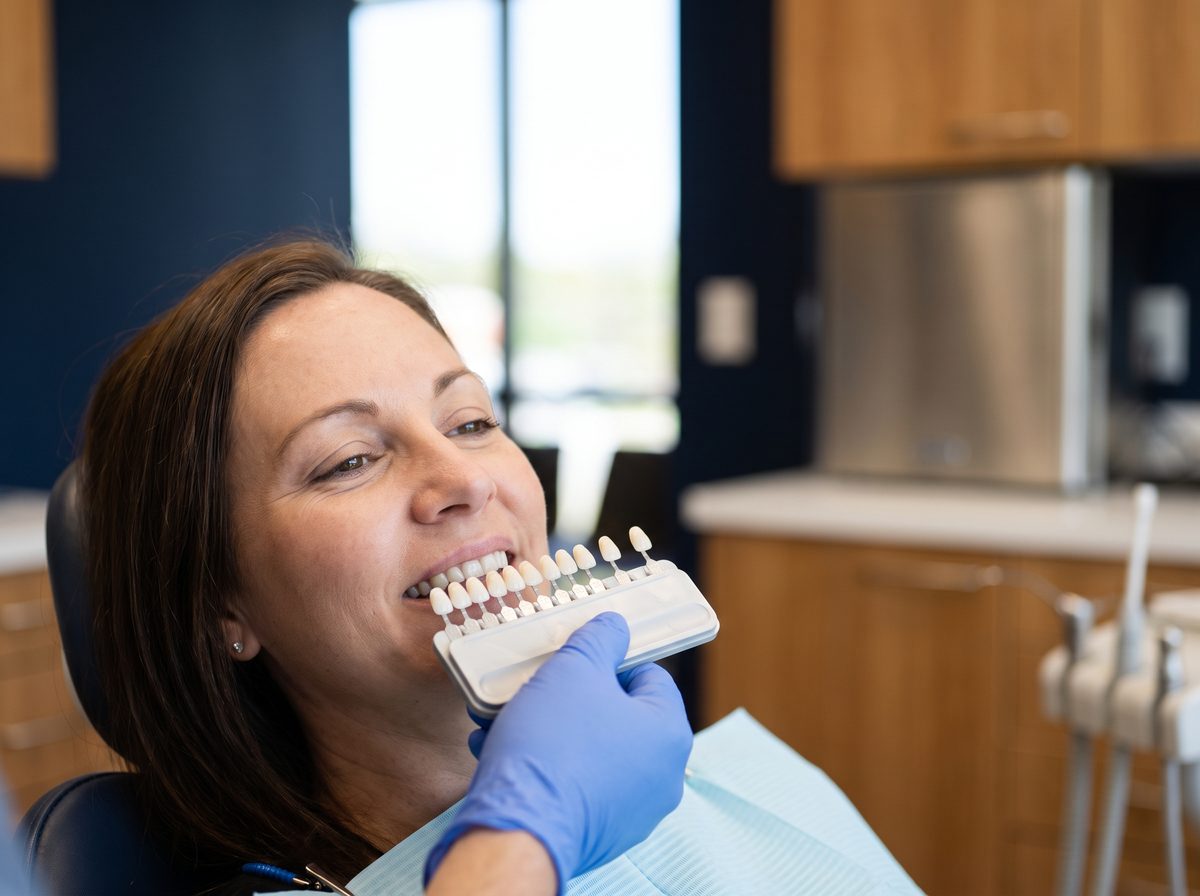
Only if they are designed that way. Natural-looking veneers vary slightly in translucency and shade, follow the line of your lip, and are proportioned to your face rather than made uniformly white and rectangular. We preview the design before anything is made, so you approve the look first.
How long does a full smile makeover take?
Most cosmetic cases finish in two to four weeks across two or three visits. If the plan also includes aligners to move teeth first or gum recontouring, expect several months. Start with our smile improvement overview.
Straightening Teeth
Invisalign & Orthodontics
Clear aligners for adults and teens, answered honestly.
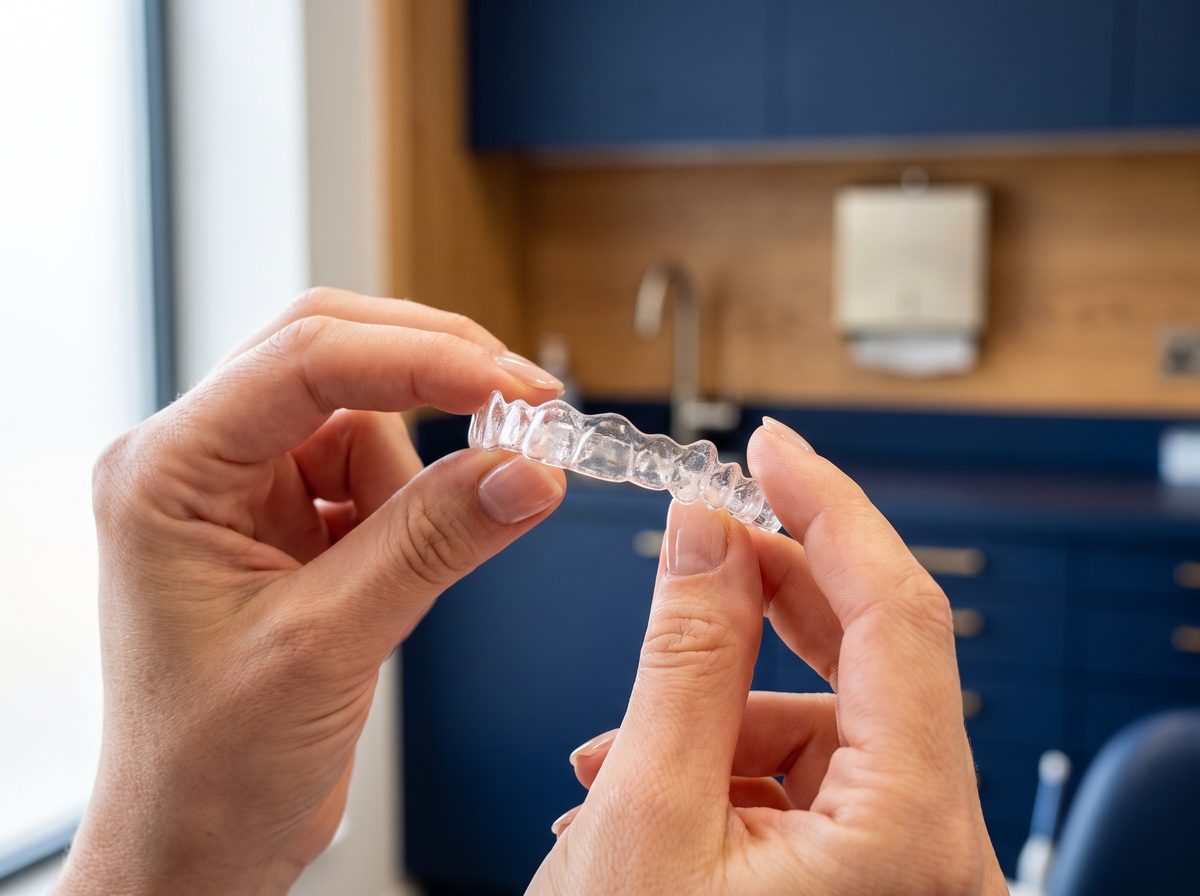
Is Invisalign as effective as traditional braces?
Yes, Invisalign is highly effective for most orthodontic issues including crowding, spacing, and bite problems. Treatment time is typically 12-18 months for most cases.
How much does Invisalign cost in San Diego?
Cost tracks case length. A minor crowding case that takes a few months costs well under a full-arch case that runs 18 months. Many dental plans include an orthodontic benefit that applies to aligners, and we offer monthly financing. Details on our orthodontics page.
How many hours a day do I have to wear my aligners?
Twenty to twenty-two hours — out for meals and brushing, in for everything else. This is the single biggest factor in whether you finish on time. Patients who treat them as optional add months to treatment.
Am I too old for braces or aligners?
No. Teeth move at any age as long as the gums and bone supporting them are healthy, and a large share of our aligner patients are adults in their 40s, 50s, and 60s. We check periodontal health first, because moving teeth in inflamed gums is a bad idea.
Will I need a retainer afterward?
Yes, permanently, and this is not upselling. Teeth drift back toward their original position for the rest of your life. Nightly retainer wear is the difference between the result you paid for and a relapse in three years.
Pain & Urgent Care
Root Canals, Pain & Dental Emergencies
If something hurts right now, call (858) 560-1996. If you are researching first, start here.
Will my root canal be painful?
Modern root canal procedures are comfortable with local anesthesia. Most patients experience little to no discomfort during treatment and mild soreness afterward that resolves quickly.
What counts as a dental emergency?
Call us the same day for a knocked-out or loosened tooth, swelling in the face or jaw, uncontrolled bleeding, a broken tooth with sharp pain, or pain that wakes you at night. Facial swelling with fever needs immediate care — that is an infection spreading, not a toothache. See dental pain relief.
What should I do if a tooth gets knocked out?
Pick it up by the crown, never the root. Rinse it gently with milk or saline if it is dirty, and either place it back in the socket or keep it in milk. Get to us within 60 minutes — that window largely determines whether the tooth can be saved.
My tooth only hurts when I bite down. What does that mean?
Pain on biting usually points to a cracked tooth, a high filling, or inflammation at the root tip. A crack that has reached the nerve typically needs a root canal and a crown to hold the tooth together. Cracks only get worse, so this is worth an exam now rather than later.
Do I need a crown after a root canal?
On back teeth, almost always. A treated tooth is hollowed out and brittle, and chewing forces will split it without full coverage. Front teeth sometimes do fine with a filling. We can often place the crown the same day using CEREC.
My gums bleed when I brush. Is that normal?
No. Healthy gums do not bleed. Bleeding is the first sign of gingivitis, which is reversible with a professional cleaning and better home care. Left alone it becomes periodontitis, which destroys the bone holding your teeth in. See gum disease treatment.

Restoring Teeth
Crowns, Fillings & Same-Day CEREC
How we repair damaged teeth, and why most of it finishes in one appointment.
What is CEREC technology?
CEREC allows us to create custom crowns, veneers, and other restorations in a single visit using 3D imaging and computer-aided design and manufacturing.
What's the difference between a crown and a filling?
Fillings repair small areas of decay, while crowns cover the entire visible portion of a tooth. Crowns are used for extensively damaged or weakened teeth.
Can I really get a crown in one visit?
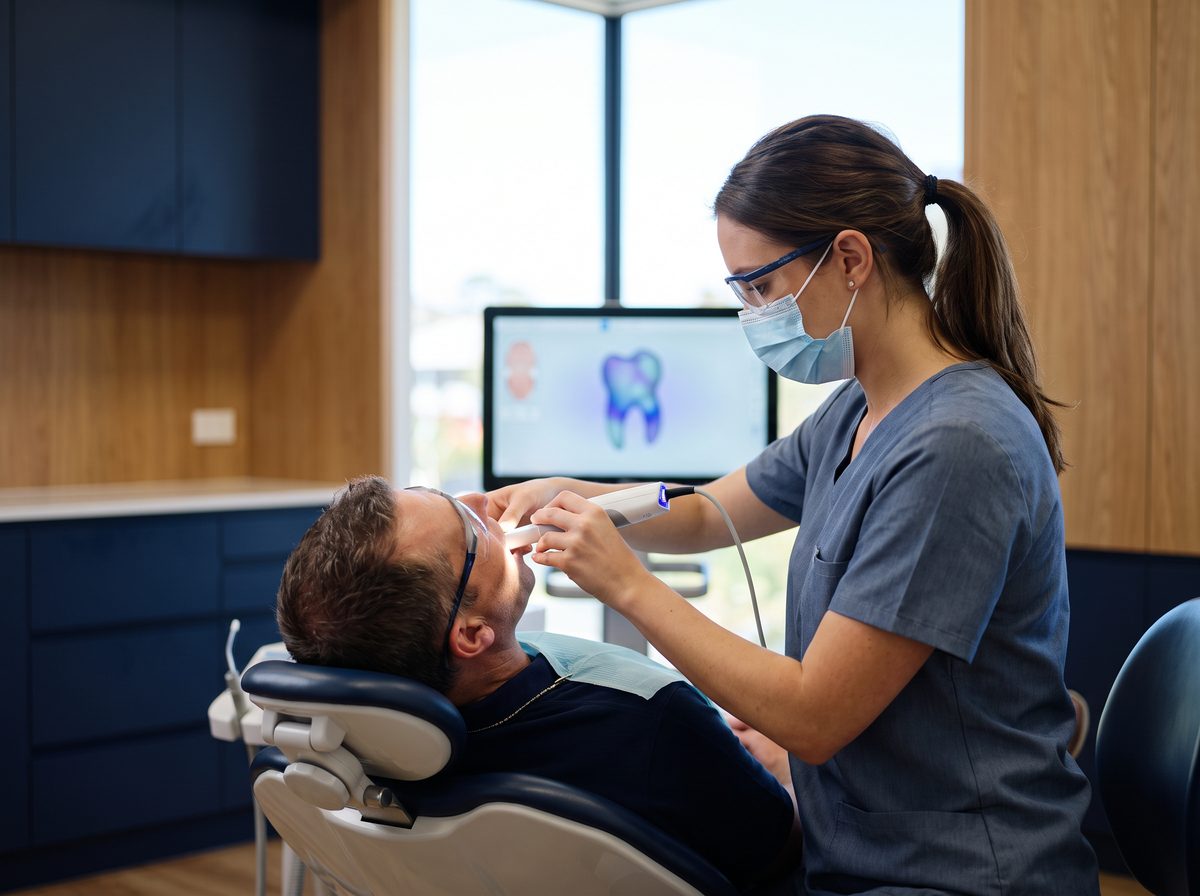
Yes. We scan the tooth digitally, design the crown on screen, and mill it from a ceramic block in our office while you wait. No impression putty, no temporary crown falling off over a long weekend, no second appointment two weeks later.
How long do crowns and fillings last?
A well-cared-for crown commonly lasts 10 to 15 years and often longer; composite fillings usually run 7 to 10 years. What shortens both is grinding, chewing ice, and decay starting at the margin — which is exactly what we watch for at your six-month exam.
Do you place metal amalgam fillings?
No. We use tooth-colored composite and ceramic restorations, which bond to the tooth, require removing less healthy structure, and are invisible when you laugh. If you have older silver fillings that are cracking or leaking, we can replace them. See cavity treatment.
For the Whole Family
Kids & Family Dentistry
One office for every age, so you are not driving across town to two practices.
Do you treat children?
Yes, we provide comprehensive dental care for patients of all ages, including children. We create a comfortable, friendly environment for young patients.
When should my child first see a dentist?
By their first birthday, or within six months of the first tooth appearing. The first visits are short, friendly, and mostly about making the chair feel normal — a child who is comfortable at three is a patient who is comfortable at thirty.
Are dental X-rays safe for children?
Yes. Our digital sensors use roughly 80 to 90 percent less radiation than old film, and a full set of child X-rays is a small fraction of the background radiation you get from a day of ordinary life. We only take them when there is a reason, not on a fixed schedule.
What are sealants, and does my child need them?
A sealant is a thin protective coating painted into the deep grooves of back molars, where toothbrush bristles cannot reach and most childhood cavities start. It takes minutes, requires no numbing, and dramatically cuts decay risk on those surfaces.
Can our whole family be seen the same day?
Yes, and we encourage it. Back-to-back family appointments mean one trip and one time off work instead of four. Tell us who is coming when you request an appointment and we will block the time together.

Still have a question?
Ask us directly. We answer the phone during office hours and reply to messages the same business day. Monday, Tuesday and Thursday 8am to 5pm and Wednesday and Friday 8am to 2pm, at 4320 Genesee Avenue, Suite 201 in Clairemont Mesa - and we see patients from across central San Diego.
or call (858) 560-1996